These projects showcase my work in naturalistic illustration, depicting elements of nature such as fauna, flora, and landscapes, with a high level of accuracy, detail, and artistic sensitivity. Unlike scientific illustration, naturalistic illustration seeks to capture beauty, essence, and the illustrator’s personal perspective, often situating subjects within their ecological context. It is commonly used in popular science books, field guides, and art.
SALTMARSHES FROM CÁDIZ – June 2025
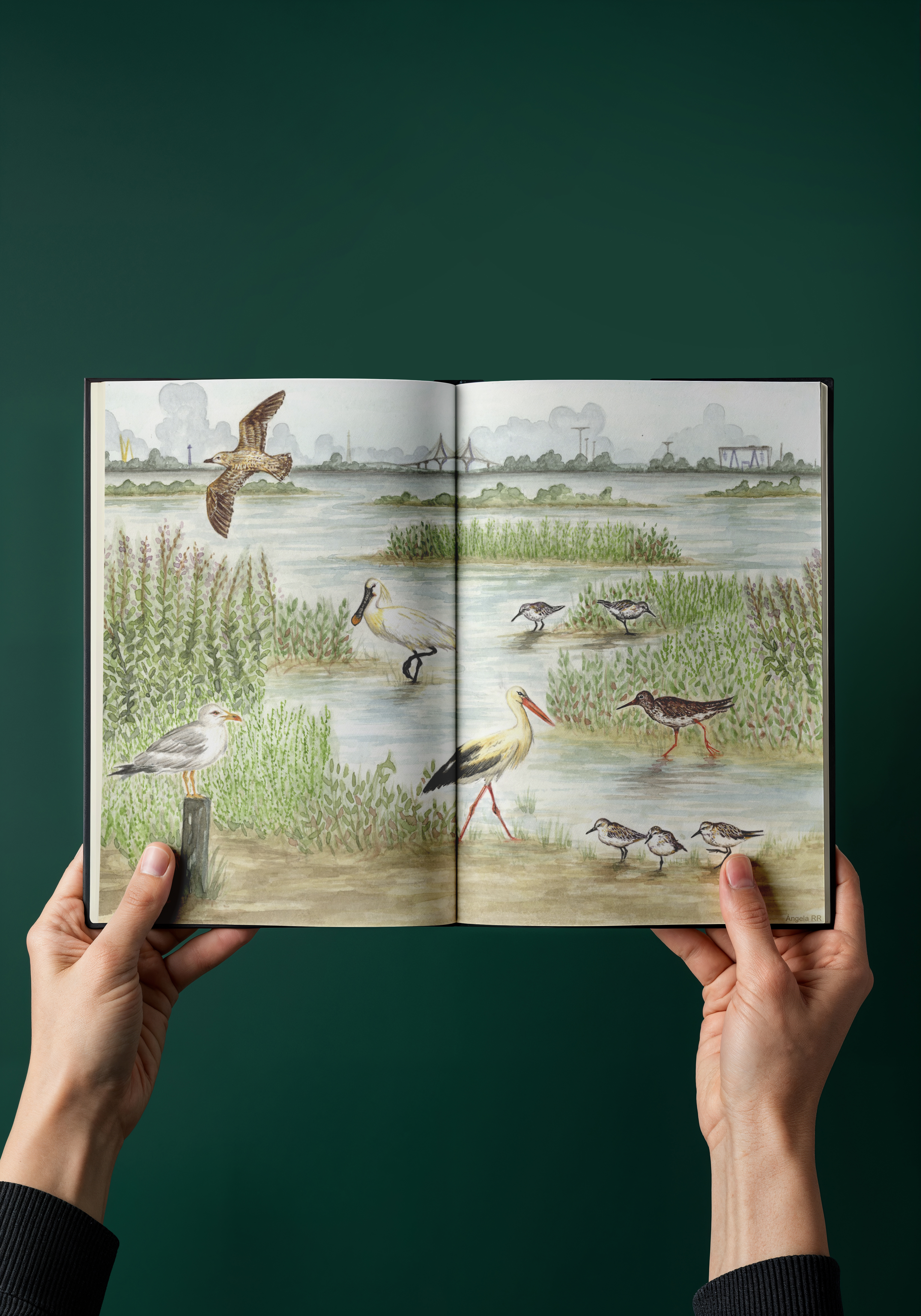
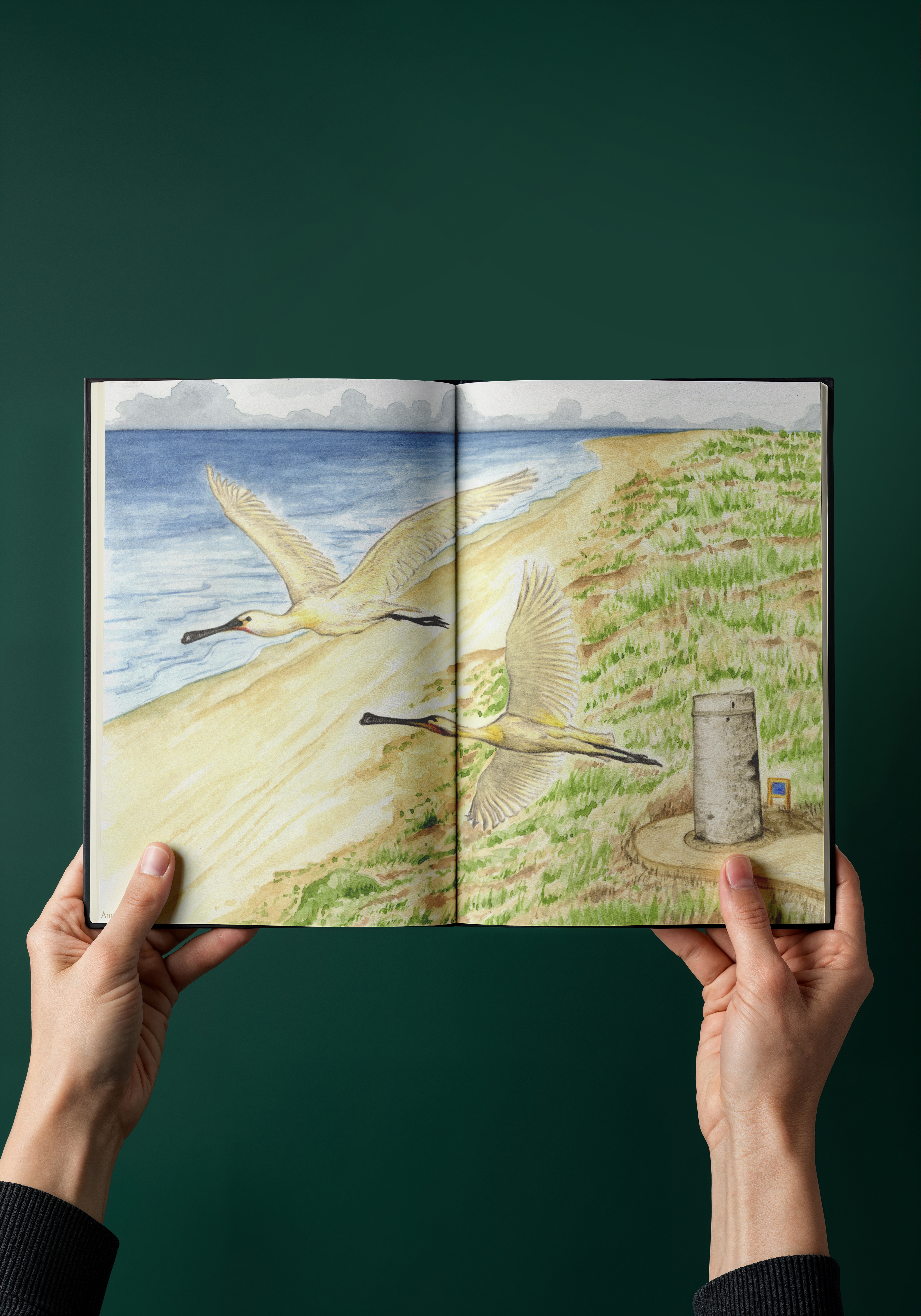
A representative example of naturalistic illustrations is this pair of illustrations created for Francisco Hortas, Associate Professor at the University of Cádiz and an expert in shorebird communities in salt pans of southwestern Spain, focusing on population dynamics and habitat use.
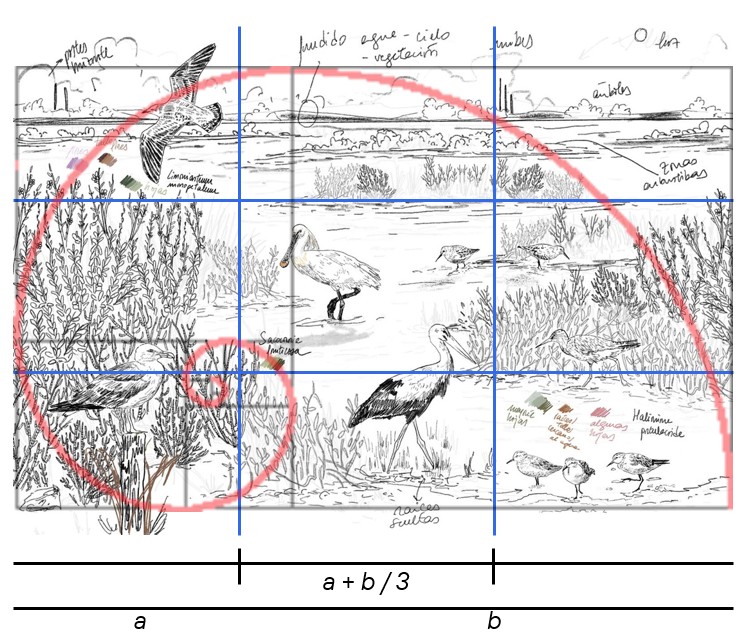
One illustration depicts the typical avifauna and vegetation of a salt pan in the Bay of Cádiz, featuring bird species such as Larus michahellis, Larus fuscus, Tringa totanus, Calidris alpina, Calidris minuta, Ciconia ciconia, and Platalea leucorodia, along with characteristic plant species including Limoniastrum monopetalum, Sarcocornia fruticosa, and Halimione portulacoides.
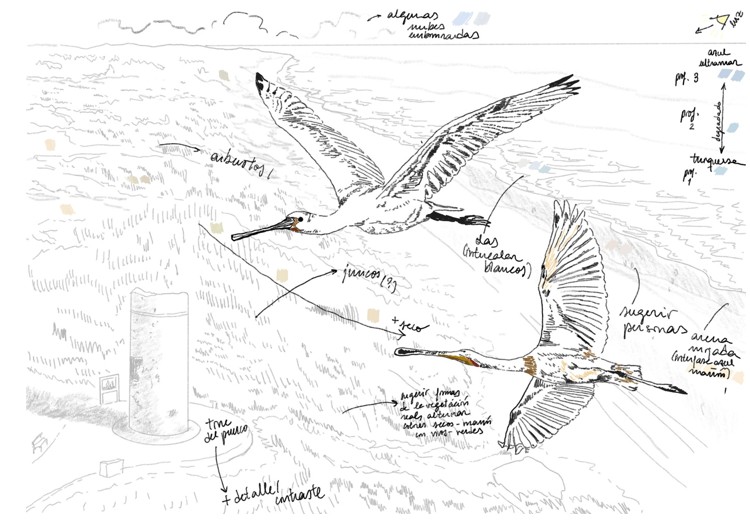
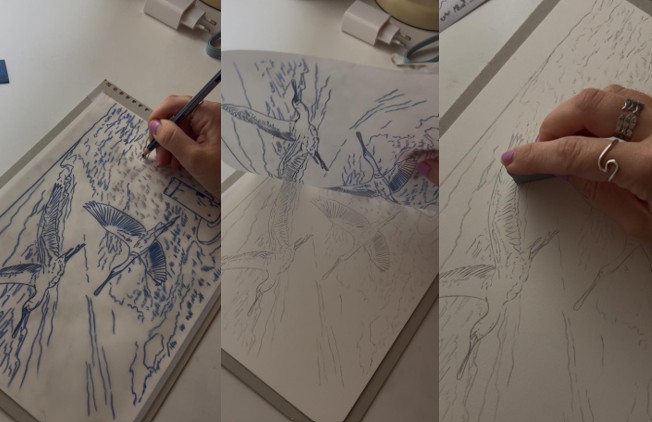
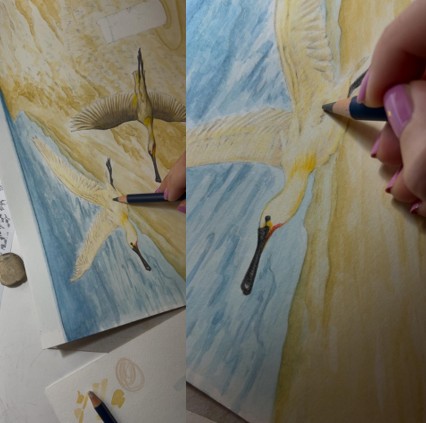
The second illustration shows two Eurasian spoonbills (Platalea leucorodia) flying over La Barrosa beach–Cabo de Roche, an area identified as a new migration corridor during one of his research projects.
In these illustrations, the proportions and essential characters of each species are represented holistically, reflecting the common traits of the population as a whole as well as their interaction with the surrounding environment. Aesthetic considerations play an important role, and compositions are developed following the Fibonacci distribution (the well-known rule of thirds), which helps guide the viewer’s eye naturally through the scene, creating visual balance, depth, and harmony.
Once the initial sketch is completed, the artwork is transferred onto watercolor paper and brought to life using watercolors and colored pencils.